Forklift vs. Telehandler: Which One Is Right for Your Job?
Two Ways to Move Materials. One Important Choice.
Moving heavy materials is part of almost every construction, warehouse, and industrial operation. But choosing the right machine for the job isn't always as simple as finding something with forks.
Two common options are forklifts and telehandlers. While they can perform some similar tasks, they're designed for very different working environments.
Choosing the right one can help your crew move materials more efficiently and avoid bringing equipment onto the site that doesn't match the work.
What Is a Forklift?
Forklifts are designed primarily for lifting, transporting, and positioning materials over relatively short distances.
They're a familiar sight in warehouses, distribution centers, manufacturing facilities, loading areas, and construction environments.
Forklifts are commonly used for:
- Loading and unloading trucks
- Moving palletized materials
- Stocking inventory
- Transporting supplies
- Positioning materials
- Warehouse operations
- Industrial material handling
Their compact design and maneuverability make forklifts especially useful when working in controlled spaces where materials need to be moved efficiently throughout the day.
What Is a Telehandler?
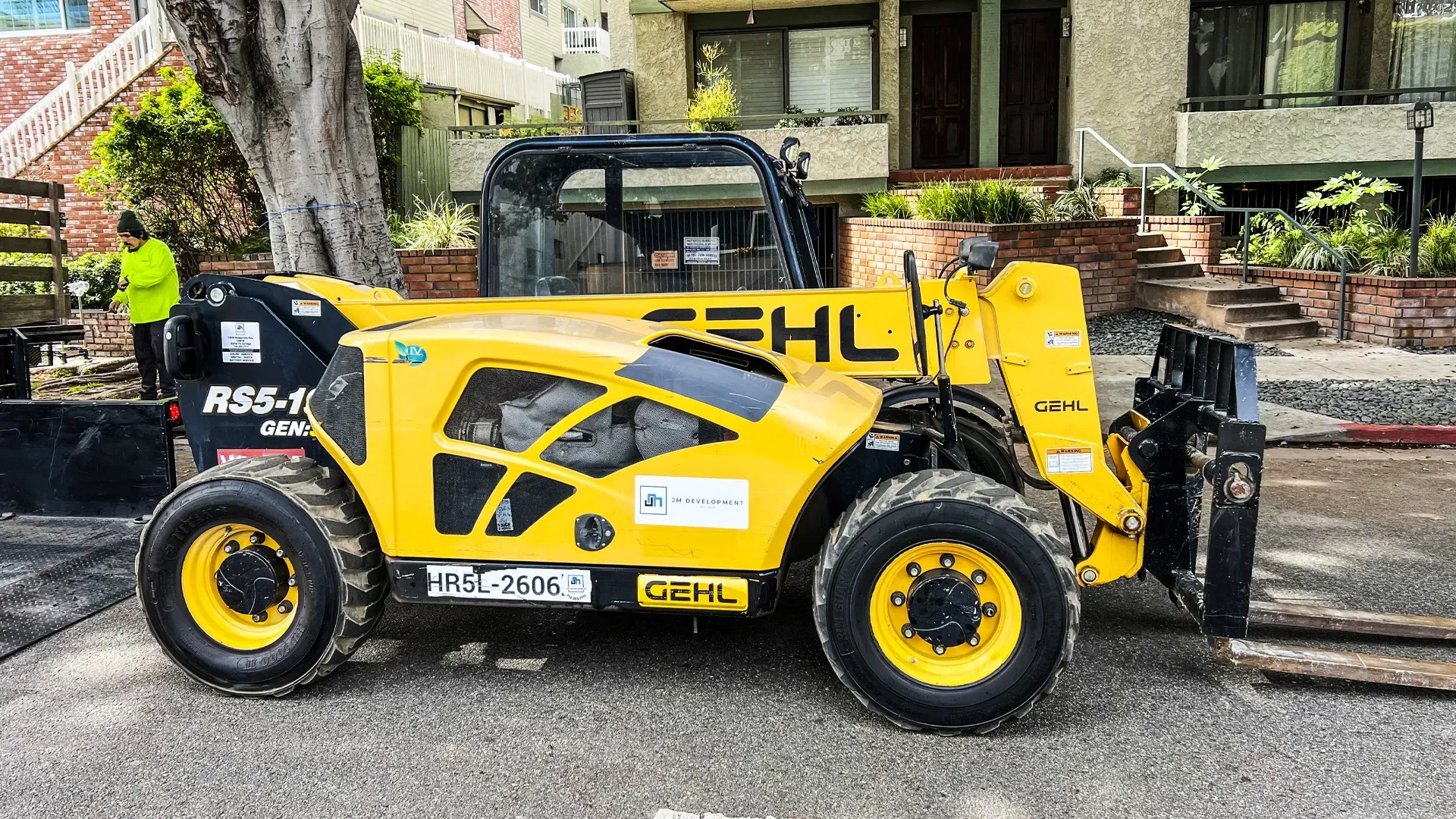
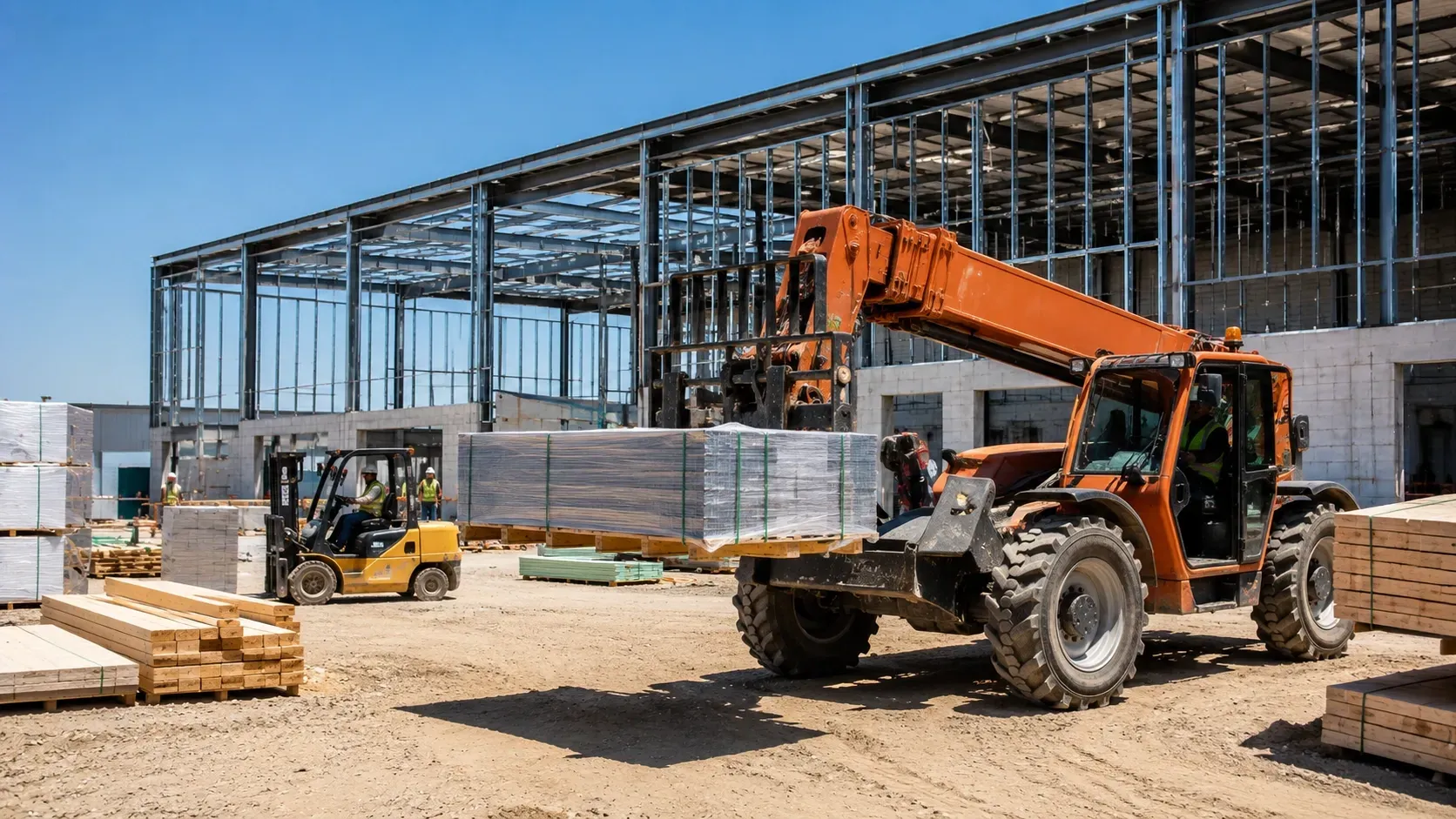
A telehandler combines material-handling capability with an extendable boom.
Instead of simply raising a load vertically, the telescoping boom allows operators to move materials forward and upward, providing significantly more reach than a traditional forklift.
Telehandlers are commonly used for:
- Commercial construction
- Framing
- Masonry
- Roofing projects
- Moving building materials
- Placing materials on elevated levels
- Working across unfinished terrain
- Large outdoor job sites
That combination of reach, lifting capability, and job-site mobility makes telehandlers particularly valuable on construction projects.
Forklift vs. Telehandler: What's the Difference?
The biggest difference is where the material needs to go.
A forklift is often the better choice when materials need to be picked up, transported, and placed within a warehouse, facility, loading area, or relatively level job site.
A telehandler becomes valuable when materials need to travel beyond the immediate reach of the machine.
For example, a construction crew may need pallets of materials delivered to an elevated floor or positioned beyond an obstacle. A telehandler's extendable boom can provide access that a traditional forklift cannot.
Consider the Working Environment
Before choosing either machine, take a close look at the job site.
For indoor warehouses and facilities with smooth floors and tighter aisles, a forklift may provide the maneuverability the operation requires.
Outdoor construction environments can present different challenges, including unfinished surfaces, dirt, changing elevations, and larger working areas.
Telehandlers are commonly designed with these conditions in mind.
Ask yourself:
- Will the equipment operate indoors or outdoors?
- Is the surface paved, concrete, dirt, or unfinished?
- How high do materials need to be placed?
- How far forward does the machine need to reach?
- What is the weight of the materials?
- How much room is available to maneuver?
- Will the equipment travel across uneven terrain?
The answers can quickly point you toward the better option.
Don't Choose Based on Capacity Alone
It's easy to focus entirely on how much weight a machine can lift.
Capacity matters, but it isn't the only factor.
The weight of the load, required lift height, reach distance, terrain, attachments, and machine configuration can all affect which equipment is appropriate for the job.
That's why it's important to consider the entire application rather than simply choosing the machine with the largest number on the specification sheet.
Renting Gives You More Flexibility
One project might require a forklift working inside a warehouse. The next may require a telehandler moving building materials across an active construction site.
Renting allows contractors and businesses to choose equipment based on the work they're actually performing instead of trying to make one machine handle every situation.
It also reduces the need to purchase, store, and maintain specialized equipment that may only be required occasionally.
Forklift and Telehandler Rentals from JM Development
Whether you're moving pallets across a warehouse floor or positioning building materials on an active construction site, having the right equipment can make a significant difference in how efficiently the work gets done.
JM Development provides dependable forklift, telehandler, and construction equipment rentals throughout the Greater Los Angeles area, helping contractors and businesses find equipment suited to the demands of each project.
Don't just move the material. Put the right machine behind it.
S H A R E